Portfolio InsightsHOMA - A place to live, beyond a stay.
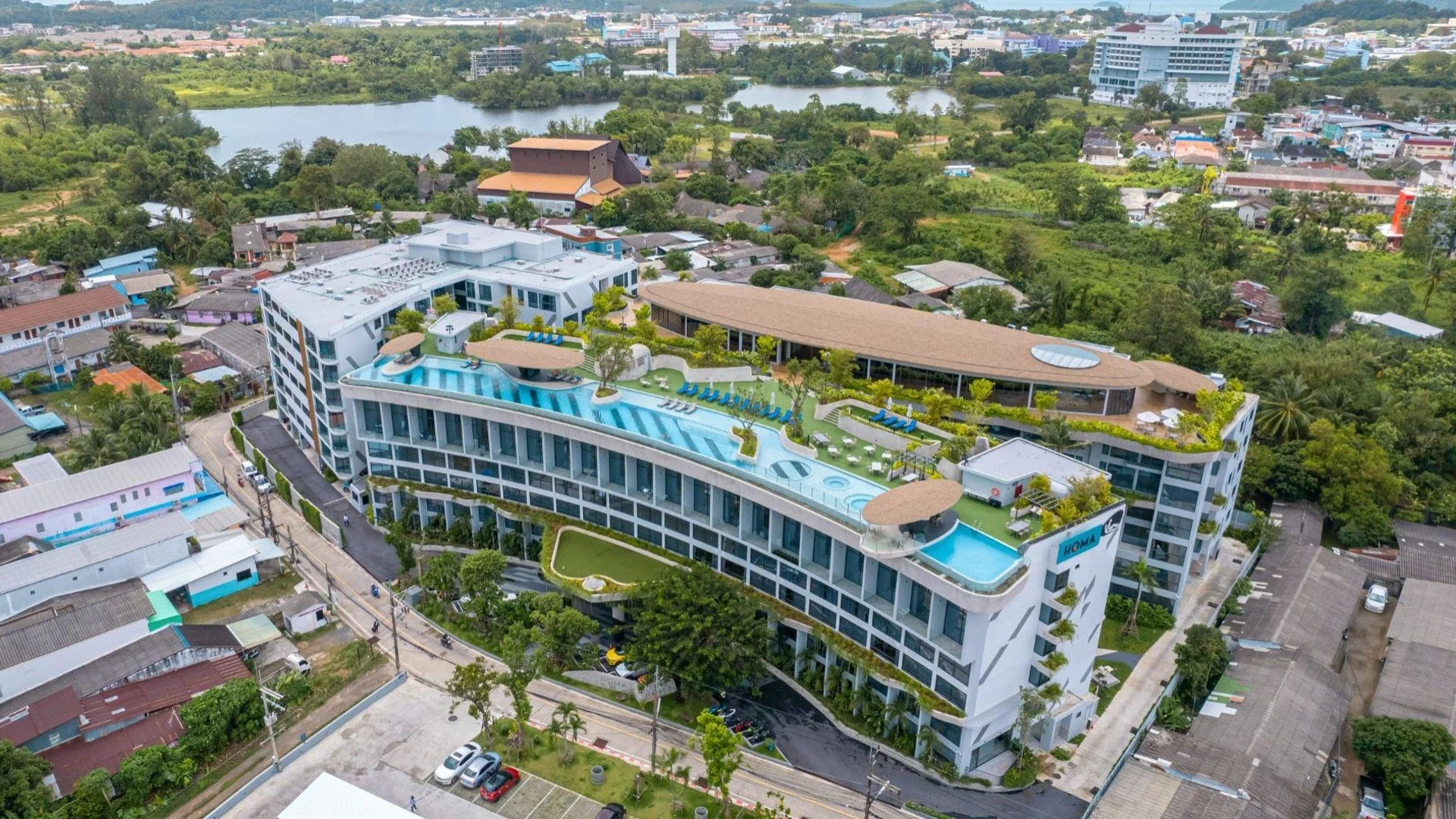
HOMA Phuket Town is a co-living and co-working community built for people who work from anywhere and have chosen to be here for a while. Five hundred and five units. A genuine neighbourhood. Phuket Island, Thailand.

Our investment in details: HOMA
-
HOMA Phuket Town is a 505-unit co-living and co-working development on Phuket Island, the first of a series of multifamily projects in Thailand developed through a joint venture between STARR International, Asia Capital Real Estate, and NOON Capital. It was conceived to serve several different resident profiles, including local professionals working at a nearby hospital, though the project's focus progressively shifted toward a more specific and at the time still poorly understood user: the working professional who travels continuously and requires a base rather than a bed.ur contact form or schedule a call—we’ll walk you through the next steps and answer any questions along the way.
-
Digital nomads, broadly speaking, are independent adults between twenty-five and forty whose work is portable and whose lives are organised accordingly. They tend to gather in places that are agreeable to live in for longer stretches: coastal towns, tropical islands, cities with a certain quality of light and pace. Phuket, after reopening following the COVID lockdowns, attracted a meaningful number of them, and what the HOMA team observed was that demand for stays well beyond the standard tourist week had grown substantially and showed no sign of slowing.
Building for this group carried real uncertainty. The work-from-anywhere culture was new enough that no established formula existed for what price point or what mix of services it actually required. The project proceeded on conviction rather than precedent.
-
Since opening in 2021, HOMA has hosted nine hundred guests from more than fifty countries. The average length of stay is three hundred days. Occupancy runs between ninety-three and ninety-five percent. The model, in short, has proved itself.
-
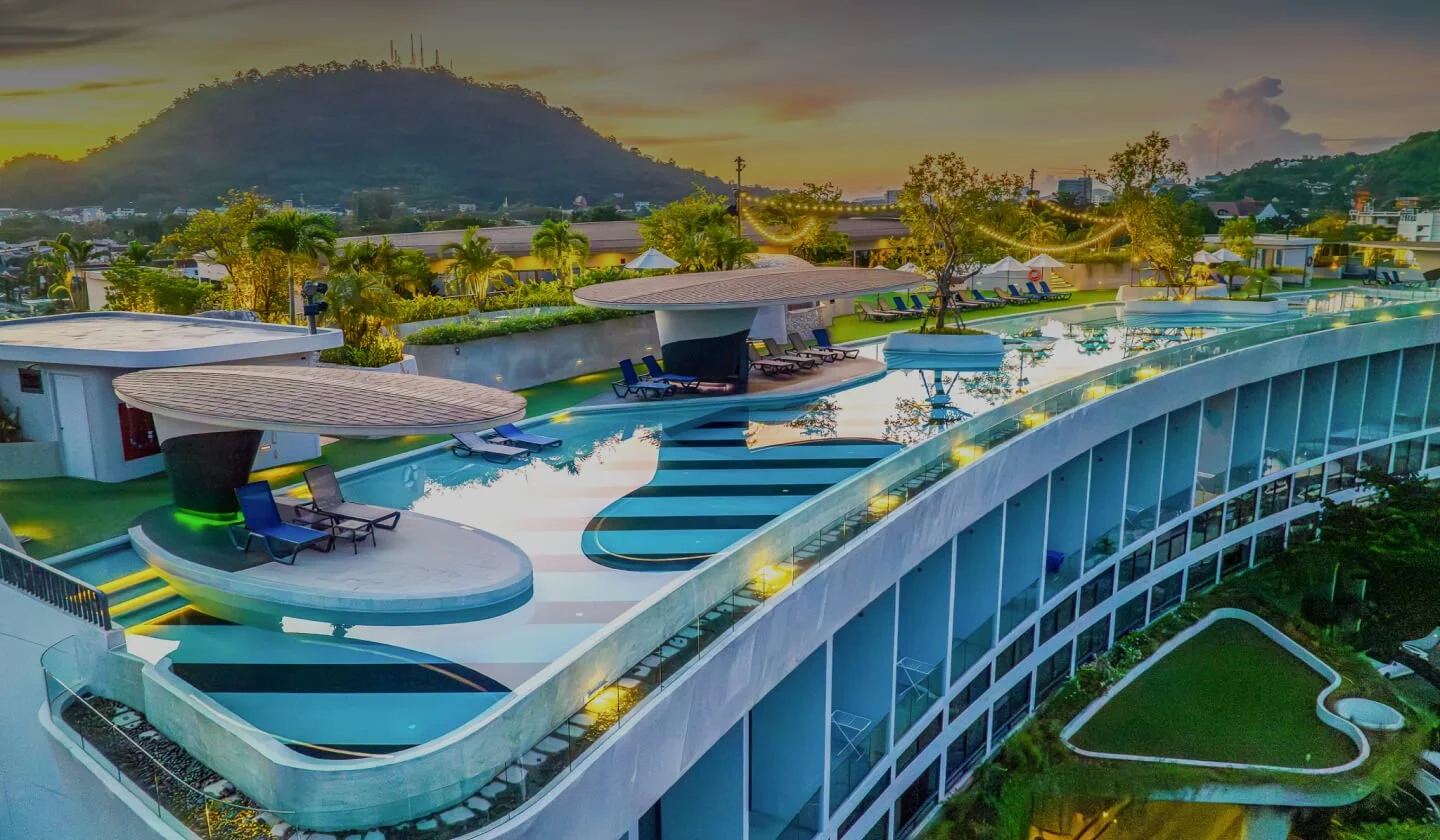
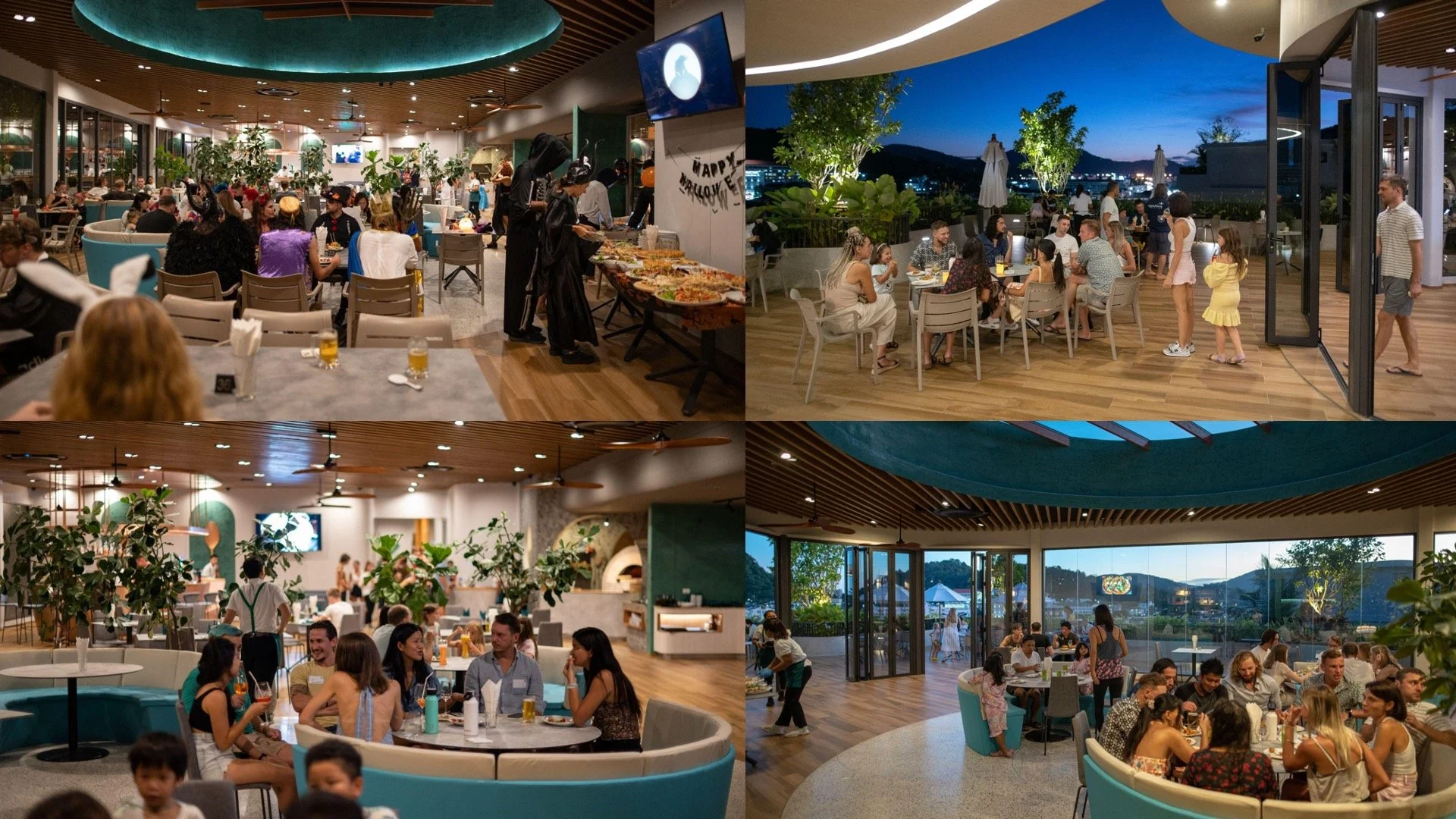
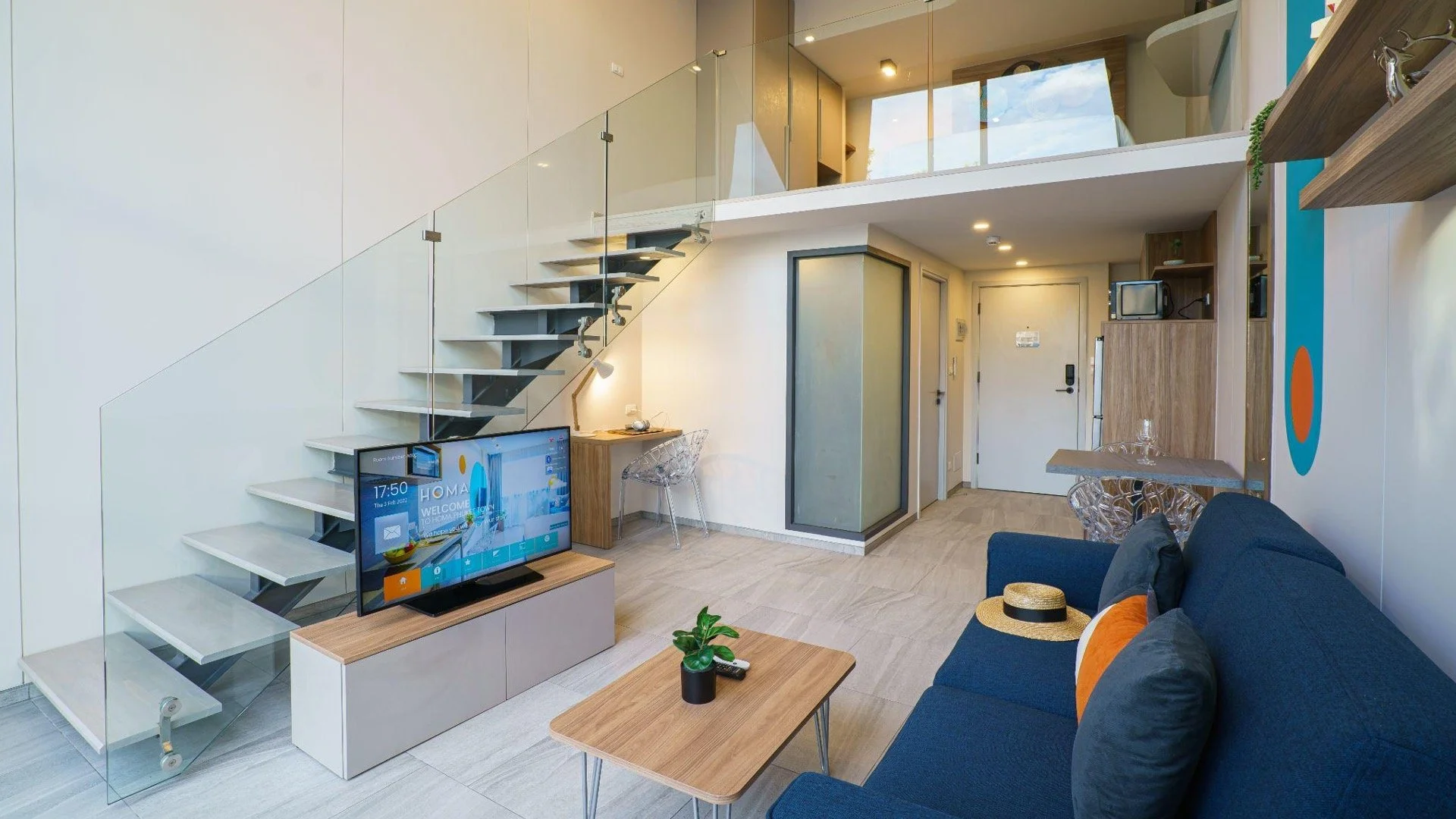
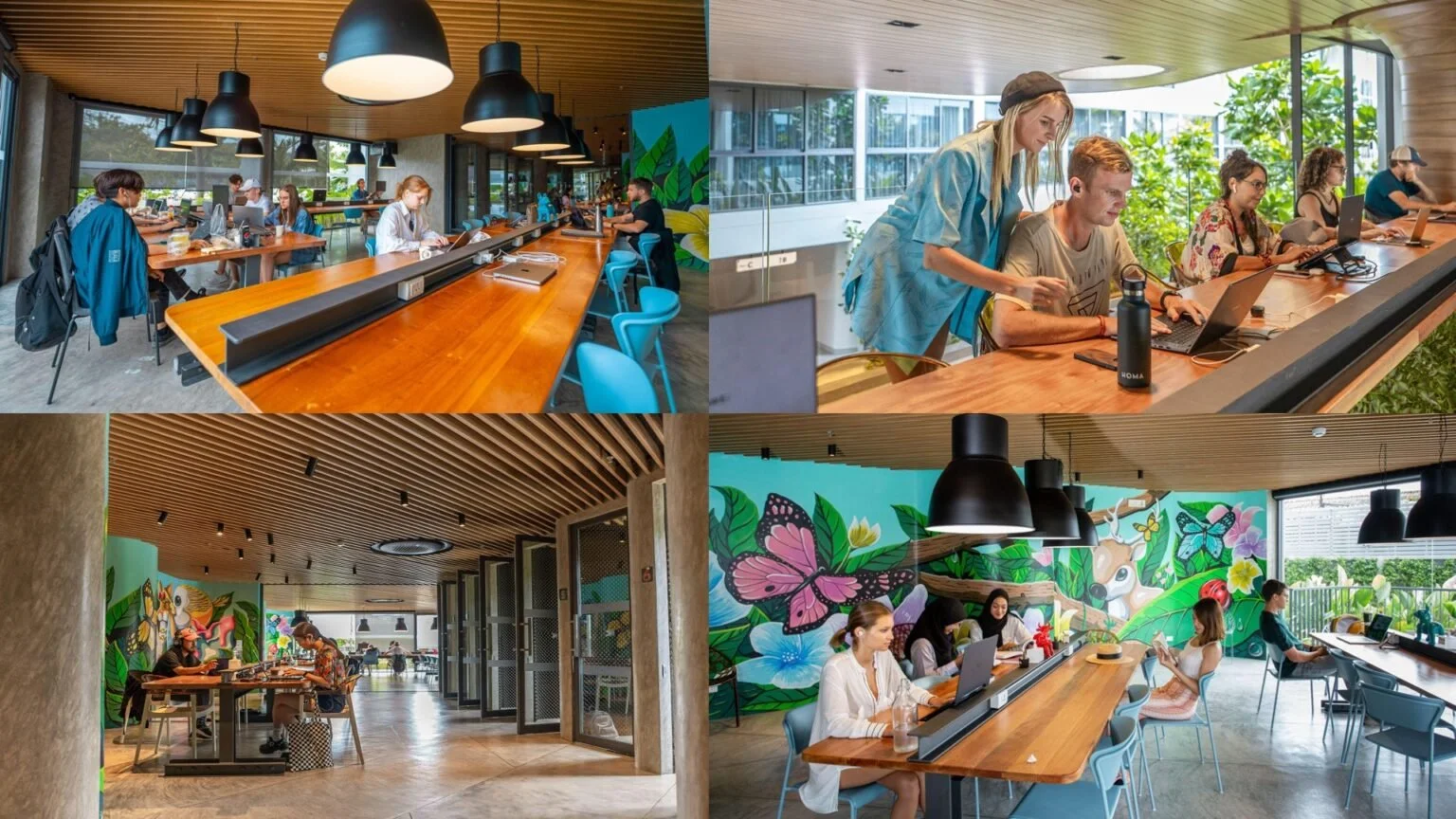
Accommodation ranges from single-person studios to larger serviced apartments, with stays from one month to one year. The offer extends well beyond the room itself. A substantial coworking facility sits at the centre of the building's life. Given that the resident profile tends toward the health-conscious, significant attention has been paid to wellness, including a swimming pool, yoga studio, and gym. What has also emerged, somewhat unexpectedly, is a genuinely multigenerational community: families with children in local schools, grandparents involved in daily life, couples settling in for months at a time. Events and programming are organised regularly to sustain that sense of shared life.
-
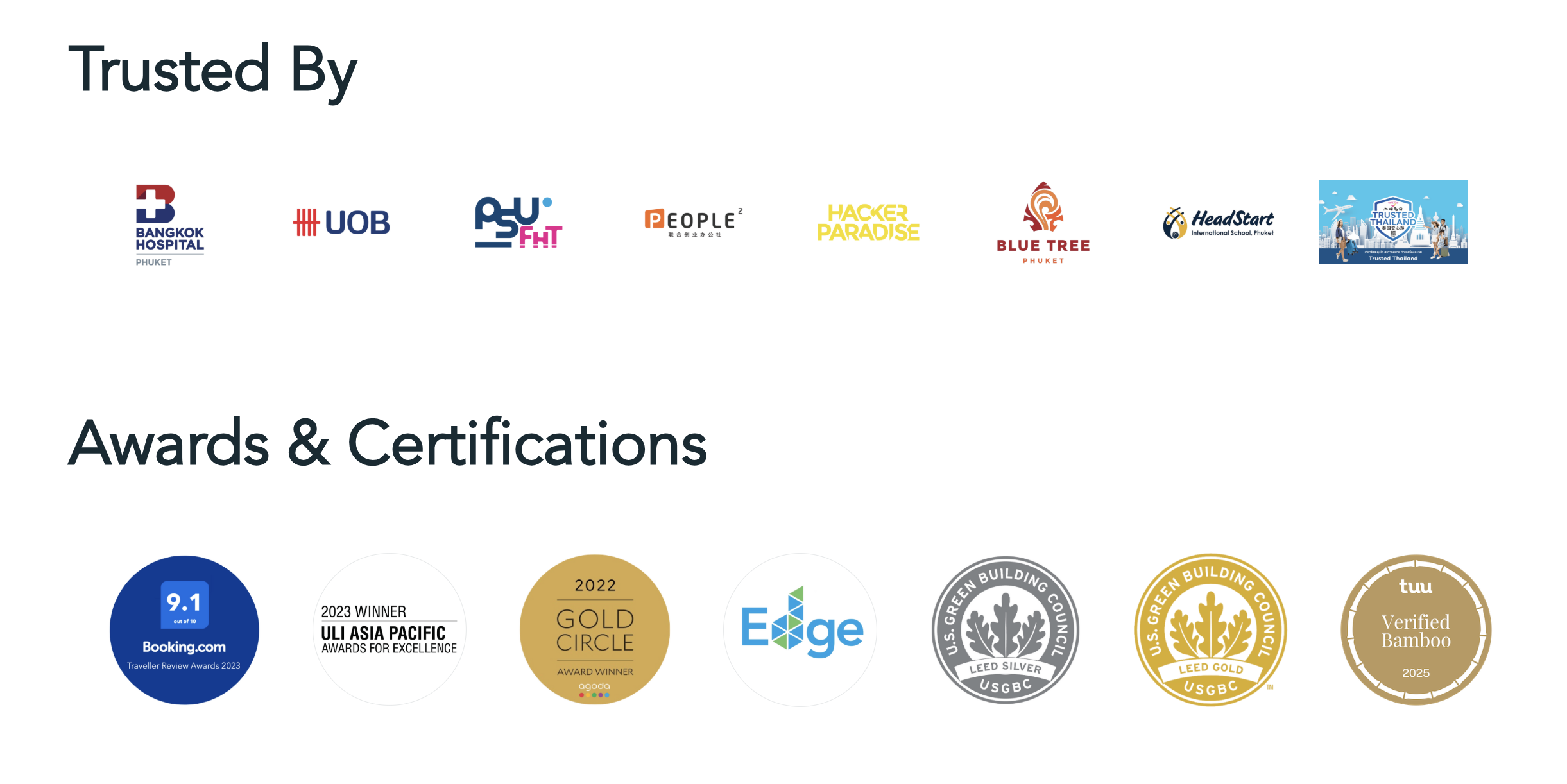
HOMA is Thailand's first purpose-built residential development to carry both LEED and EDGE certification. The building makes considered use of natural ventilation, shading, sustainable materials, rooftop solar arrays generating 1.3 megawatts per day, and rainwater and greywater recycling. The design itself is worth noting separately: the project achieved an aesthetic quality more commonly associated with high-end properties while working with modest materials, sand-wash finishes and wood-look aluminium among them, the result of a disciplined functional design process rather than an inflated budget.
-
Because HOMA sits outside Phuket's traditional tourist zones and is home to semi-permanent residents rather than visitors, it has effectively created a self-sustaining neighbourhood, generating steady demand for local restaurants, services, and businesses. As Thailand's first multifamily development of this kind, it has demonstrated a financially viable alternative to conventional strata-titled projects, and established a business and design template that is, by design, replicable.